Day 1: True's Neighbour
General • Refresh: A Summer Collection (Vol. 3) •
“But who do you say I am?” Simon Peter answered, “You are the Messiah, the Son of the living God.” — Matthew 16:15–16 (NLT)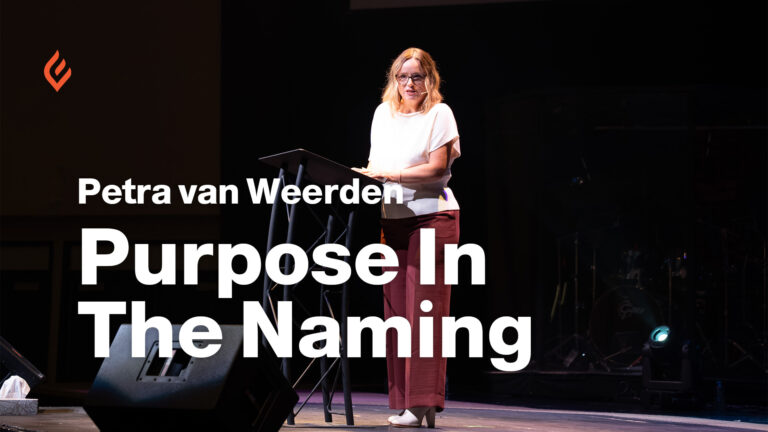
General • Refresh: A Summer Collection (Vol. 3) •
“But who do you say I am?” Simon Peter answered, “You are the Messiah, the Son of the living God.” — Matthew 16:15–16 (NLT) General • Refresh: A Summer Collection (Vol. 3) •
“Andrew went to find his brother, Simon, and told him, ‘We have found the Messiah’ (which means ‘Christ’).” — John 1:41 (NLT) General • Refresh: A Summer Collection (Vol. 3) •
“The Spirit of the Lord is upon me, for he has anointed me to bring Good News to the poor.” — Luke 4:18 (NLT) General • Refresh: A Summer Collection (Vol. 3) •
“All Scripture is inspired by God and is useful to teach us what is true.” — 2 Timothy 3:16 (NLT) General • Refresh: A Summer Collection (Vol. 3) •
“No, those prophets were moved by the Holy Spirit, and they spoke from God.” — 2 Peter 1:21 (NLT) General • Refresh: A Summer Collection (Vol. 3) •
“And I will ask the Father, and he will give you another Advocate, who will never leave you.” — John 14:16 (NLT) General • Refresh: A Summer Collection (Vol. 3) •
“‘Teacher, which is the most important commandment in the law of Moses?’ Jesus replied, ‘You must love the Lord your God with all your heart, all your soul, and all your mind… A second is equally important: Love your neighbour as yourself.'” — Matthew 22:36–39 (NLT) General • Refresh: A Summer Collection (Vol. 3) •
“But who do you say I am?” Simon Peter answered, “You are the Messiah, the Son of the living God.” — Matthew 16:15–16 (NLT)
There’s an eight-year-old boy named True who lives in the neighbourhood. He’s funny, witty, well-mannered, and an absolute joy. He shows off tricks on his bicycle, comes along to walk the dog, and tells you all about his favourite breakfast. True doesn’t go to church and has no idea what church life looks like, but his whole family calls Pastor Leon “Pastor”. So True does too.
One day, Pastor Petra mentioned “Leon” in conversation. True’s eyes went wide. He shook his head firmly. “That’s not Leon,” he said. “That’s Pastor.”
It’s a beautiful misunderstanding. Neither Pastor Leon nor Pastor Petra have any intention of correcting it, because what matters is the wonderful relationship they have with True. Time will teach him the rest.
In this message, Pastor Petra addressed three common misunderstandings about God. What she found at the heart of all three was the same thing: the relationship comes first.
Right belief isn’t the entrance exam to knowing God. It’s what grows within the relationship.
This week is an invitation to hold your theology a little more humbly and your relationship with God a little more warmly.
Is there a misunderstanding about God you grew up with that has slowly been corrected not by someone explaining it to you, but by your own experience of relationship with Him?
Where might you be making “correct doctrine” the entrance exam to your relationship with God? Or to other people’s relationship with Him?
Lord, I want to know You more than I want to know about You. I want to hold what I think I know with open hands. Where my theology has become a wall rather than a window, gently correct me. The relationship comes first. Let me live from that today. Amen.
General • Refresh: A Summer Collection (Vol. 3) •
“Andrew went to find his brother, Simon, and told him, ‘We have found the Messiah’ (which means ‘Christ’).” — John 1:41 (NLT)
We all have a first name and a last name, so Jesus must be His first name and Christ must be His last. But “Jesus Christ” didn’t start as a name — it started as a sentence. Jesus is the Christ. A claim. A title. Something like saying “Jesus is the President” or “Jesus is the CEO”, except the title being given was far weightier than any of those.
Christ comes from the Greek Christos. Messiah comes from the Hebrew mashiach. Both mean exactly the same thing in their respective languages: the anointed one. In ancient Israel, when someone was anointed with oil over their head, it symbolized a change in legal status, like a signature on a contract. And it was expensive oil, reserved for kings, priests, and prophets. The moment the oil touched their head, everything changed.
When the disciples began calling Jesus “the Christ,” they were making the most extraordinary claim in human history: this man, this teacher from Nazareth who was never formally crowned, never fought Rome, never sat on an earthly throne — this is the anointed One. Not anointed with oil, but anointed by the Holy Spirit. What looked like defeat on a cross turned out to be the victory they had misread the job description for all along.
How does it change the weight of the phrase “Jesus Christ” for you to understand it as a claim than just a name?
Jesus, You are the Christ. The anointed One and King I need the most. Where I’ve tried to fit You into a shape I’m comfortable with, expand my picture. You are anointed to bring good news. Let me receive it today. Amen.
General • Refresh: A Summer Collection (Vol. 3) •
“The Spirit of the Lord is upon me, for he has anointed me to bring Good News to the poor.” — Luke 4:18 (NLT)
The moment in the Nazareth synagogue is one of the most significant in the Gospels. Jesus stood up, unrolled the scroll of Isaiah, found the passage, and read it aloud. Then He sat down and every eye in the room was fixed on Him. “The Scripture you’ve just heard,” He said, “has been fulfilled this very day.”
He wasn’t anointed with fragrant oil poured over His head. He was anointed by the Spirit. By saying this, He was rewriting the job description the people had carried for generations. The Messiah they were waiting for was supposed to drive out Rome, sit on a throne, restore the temple, bring back the exiles. Instead, here was a carpenter’s son in His hometown synagogue, saying the anointing was for the poor, the captive, the blind, and the oppressed.
It’s worth pausing to notice who is on that list. These were not the powerful or the religious elite. These were the ones nobody else was building their Messianic hopes around. Jesus’ first public declaration of who He was included them at the centre of it. Not as a footnote. As the point. The throne He was anointed toward turned out to be a cross. And the peace He came to bring went deeper than the removal of any earthly army — it went to the root of sin and death itself.
Who are the “poor, captive, blind, and oppressed” in your immediate world?
How does Jesus’ anointed mission shape the mission of everyone who follows Him?
Lord, You were anointed for the ones nobody was expecting. You came for the poor and the captive and the blind. Let me follow You there, into the places where Your anointing is most needed and least celebrated. Amen.
General • Refresh: A Summer Collection (Vol. 3) •
“All Scripture is inspired by God and is useful to teach us what is true.” — 2 Timothy 3:16 (NLT)
The Bible is not a book. It’s a library of 66 books written by dozens of authors over more than a thousand years in three languages. The authors include shepherds, kings, a doctor, a tax collector, fishermen, and prisoners. Luke writes polished, historian-quality Greek. Mark writes like he’s talking very fast and repeating himself constantly. Paul forgets who he baptized. God didn’t forget. These are human voices — distinct, individual, shaped by personality and culture and circumstance.
None of that makes the Bible less than what it is. It makes it exactly what it is. The word “inspired” in 2 Timothy literally means God-breathed: He gave His breath into it. But the way He did it was not by dictating from heaven and having humans transcribe. He moved through them. Through their personalities, their languages, their experiences, their genres.
Just as Jesus was fully God and fully human, Scripture carries both the divine and the human as a gift. It means you and I can read about people in those pages who were liars, murderers, prostitutes, cowards, and say, “That could be me. And God loved them anyway.”
The Bible is not a manual on how to be correct. It is a record of a relationship of God pursuing, people running, God pursuing again. Don’t read it to master it. Read it to meet Him.
Has your relationship with the Bible ever felt like you were trying to master it rather than meet God in it? What did that look like?
How does it change your reading to know that the humanity of Scripture — its different voices, its arguments, its genres — is a feature, not a flaw?
Lord, I want to read the Bible to meet You. Thank You that You let human voices carry Your word, so that I can find myself in its pages and be found by You. Give me eyes to see who You are in every part of it. Not a God of correct doctrine, but a God of relentless relationship. Amen.
General • Refresh: A Summer Collection (Vol. 3) •
“No, those prophets were moved by the Holy Spirit, and they spoke from God.” — 2 Peter 1:21 (NLT)
One of the most disarming things about the Bible is that it doesn’t always agree with itself, on the surface.
Proverbs gives tidy rules for how life works. Job and Ecclesiastes push back on those tidy rules and say: sometimes the righteous suffer and the wicked prosper and wisdom doesn’t always explain it. Paul and Peter argued publicly about a matter of significant theological importance. And God let all of it into the Bible.
This is not a problem to solve. It is a gift to receive. It tells us something about the God who inspired this library: He is not afraid of the questions. He is not insecure about the wrestling. He lets the tension stand because the tension is part of how truth gets worked out in relationship over time, in community, and with humility.
This matters for how we hold our interpretations. None of us — no individual, no denomination — sees the whole picture alone. Culture and personal history shape what we notice and how we read. Paul knew this. Peter knew this. They still argued. The argument is in the Bible. What holds it together is not that everyone agreed, but that everyone was oriented toward the same Person. Confidence in Christ. Humility about our interpretations. That is the posture the Bible itself invites.
Where have you used “the Bible clearly says” to end a conversation rather than have one? What might honest humility look like in that situation instead?
Is there a passage or a theological question you’ve been avoiding because the tension it holds feels threatening? What would it look like to sit with the question rather than resolve it quickly?
Who in your life could help you see a part of Scripture you’ve been missing because of your own cultural or personal lens?
Lord, You let the tension into the Bible. You let people argue and question and push back. Teach me that kind of humility. Not certainty about everything, but confidence in You. Help me hold my interpretations openly and the relationship tightly. Amen.
General • Refresh: A Summer Collection (Vol. 3) •
“And I will ask the Father, and he will give you another Advocate, who will never leave you.” — John 14:16 (NLT)
About 15 years ago, a woman named Stina came to Pastor Petra after a church service. “The Holy Spirit has disappeared from this church,” she said. Why? Because people weren’t shaking. Nobody was crying. Nobody was falling down. The external expressions she associated with the Spirit’s presence were absent, and so to Stina, the Spirit must be gone.
It is a very understandable misunderstanding. Our nervous systems learn by association. When the presence of God is repeatedly paired with certain emotional intensities or outward expressions, the two become linked: when I feel or see this → God is here. When I don’t → something is wrong. That association can feel very real. But it tells us about the pairing in our nervous system, not about the presence of the Spirit.
The New Testament pattern is not the Spirit coming and going based on our spiritual hunger or our sin or the temperature of the service. The New Testament pattern is indwelling — permanent, given to all believers, sealed as a guarantee. Jesus said He will “never leave you.” Ephesians says the Spirit is God’s guarantee of the inheritance promised. The Spirit is with you when you struggle, in the moment you sin, when you laugh, when you eat dinner, when you sleep. Not because you feel Him there. Because He said He would be.
What associations have you developed between certain feelings or experiences and the presence of God? How have those associations helped you and where might they have limited you?
How does the New Testament pattern of permanent indwelling speak to your dry seasons?
Holy Spirit, You are not a feeling I need to generate. You are a Person who said You would never leave. Where I’ve been trying to call You down or earn Your presence, help me simply become aware of what is already true. You are with me. In the ordinary. In the mundane. In the hard. Let me live from that today. Amen.
General • Refresh: A Summer Collection (Vol. 3) •
“‘Teacher, which is the most important commandment in the law of Moses?’ Jesus replied, ‘You must love the Lord your God with all your heart, all your soul, and all your mind… A second is equally important: Love your neighbour as yourself.'” — Matthew 22:36–39 (NLT)
Three misunderstandings. Three corrections. And underneath all three, the same discovery: it was never primarily about getting the doctrine right. It was always about relationship.
Christ is not Jesus’ last name — it’s a title that declares He is the anointed One who came to have relationship with you, not just reign on a throne. God didn’t write the Bible alone — He breathed through human voices so that you could find yourself in the pages and be found by Him. The Holy Spirit didn’t disappear — He was given to stay, permanently, everywhere, in every moment of your ordinary life. All three corrections point to the same Person, the same love, the same pursuit.
The greatest commandment is not “have your theology correct.” It is love God with everything you have, and love the people around you the same way. Right belief isn’t the entrance exam to relationship with God. It’s what grows within the relationship, slowly, over time, the way True will eventually learn Pastor Leon’s actual name — not through correction, but through the warmth of a relationship that didn’t wait for him to have everything figured out first.
With God, the relationship always comes first.
Looking back over this week, which of the three misunderstandings shifted something for you — about Jesus, about the Bible, or about the Holy Spirit?
Lord, the relationship comes first. Not after I’ve understood everything correctly. Not once I’ve resolved the questions. Right now, as I am, with what I know and what I don’t. You pursued liars and murderers and cowards and prostitutes. You’re pursuing me. I receive Jesus Christ. The Spirit never leaves. The Bible shows me who You are. And You have always been after my heart. Amen.
 My Next Step