7 Day Devotional

Day 1: The Word Is A Person

General • Refresh: A Summer Collection (Vol. 3) •

“In the beginning the Word already existed. The Word was with God, and the Word was God… The Word gave life to everything that was created, and his life brought light to everyone.” — John 1:1, 4 (NLT)

Day 2: Who Is In The House?

General • Refresh: A Summer Collection (Vol. 3) •

“The blind and the lame came to him in the Temple, and he healed them. But the leading priests and the teachers of religious law… were indignant.” — Matthew 21:14–15 (NLT)

Day 3: The Religious Leader in You

General • Refresh: A Summer Collection (Vol. 3) •

“Corrupt tax collectors and prostitutes will get into the Kingdom of God before you do.” — Matthew 21:31 (NLT)

Day 4: Who Is Your Answer For?

General • Refresh: A Summer Collection (Vol. 3) •

“By what authority are you doing all these things? Who gave you the right?” — Matthew 21:23 (NLT)

Day 5: Your Answer Isn't Finished Yet

General • Refresh: A Summer Collection (Vol. 3) •

“The son answered, ‘No, I won’t go,’ but later he changed his mind and went anyway.” — Matthew 21:29 (NLT)

Day 6: What Happens Is What Is Real

General • Refresh: A Summer Collection (Vol. 3) •

“Which of the two obeyed his father?” They replied, “The first.” — Matthew 21:31 (NLT)

Day 7: The Temple of Your Heart

General • Refresh: A Summer Collection (Vol. 3) •

“So the Word became human and made his home among us.” — John 1:14 (NLT)

Day 1: The Word Is A Person

General • Refresh: A Summer Collection (Vol. 3) •

“In the beginning the Word already existed. The Word was with God, and the Word was God… The Word gave life to everything that was created, and his life brought light to everyone.” — John 1:1, 4 (NLT)

Devotion

Before a word could be written, it was spoken. The Word existed as a Person before the Bible was produced. The books of Genesis and John open the story of creation in the same way: in the beginning. He wants us to understand that everything — all of creation, all of life, all of light — flows from this one Person.

You may have heard this question before: are they a Bible-based church? While this questions seeks authenticity, in some ways, it is too basic of a question. Every church that calls itself a church is based on the Bible. The deeper question is: how Christ-centred are we? Is He manifest in us? Because here’s the uncomfortable truth that Jesus says plainly in John 5: you can search the Scriptures, know them thoroughly, build your entire religious identity on them, and still miss the One the Scriptures are pointing to. You can be Bible-based and miss the Word.

The Bible is not God. The Bible reveals God. It is the revelation of the manifestation and the incarnation — the living record pointing to the living Person. Christmas tells us God is with us. Easter tells us God is for us. Pentecost tells us God is in us. It is one big message with one Person at the centre of all of it. The question is not whether you know the text. It’s whether people can see Him in His people, in you.

Reflection

Is your relationship with God primarily textual or personal? What do you think is the difference?

Prayer

Lord, I don’t want to know the text and miss the Person. The Bible points to You and I want my life to as well. Let what is written become what is lived. Let what I believe be visible in how I move through life. Show me what it means to have Jesus at the centre of it all. Amen.

Day 2: Who Is In The House?

General • Refresh: A Summer Collection (Vol. 3) •

“The blind and the lame came to him in the Temple, and he healed them. But the leading priests and the teachers of religious law… were indignant.” — Matthew 21:14–15 (NLT)

Devotion

The temple had three layers. The inner courts were for priests and the Holy of Holies was for the high priest alone. But the outer court, the middle area, sometimes called the Court of the Gentiles, was the one part of the building where the outsider was allowed to stand. The one room in the whole temple where people who didn’t otherwise qualify could come and be present.

That area had been taken over by a system. Jewish men owed an annual temple tax, but it had to be paid in Tyrian silver — Roman coins carried the emperor’s image and were considered unclean, so they couldn’t be used. The money changers made the exchange for a fee. Then you had to buy a temple-approved animal for sacrifice, because your own could be rejected at inspection. The whole operation ran in the Court of the Gentiles. The only space for the outsider had been filled with religious commerce. The people who didn’t otherwise belong had nowhere left to stand.

When Jesus walked in and turned the tables, He wasn’t just making a point about money. He was reclaiming the place. And the moment He did, all came rushing in: the blind, the lame, the children. The ones the system had crowded out found their way to Him immediately. The leaders who ran the operation saw the miracles with their own eyes. They heard the children singing. And what rose up in them was not wonder. It was indignation. You can see the miracle and still miss the One performing it.

Reflection

Is there a “system” in your spiritual life (religious routine, habit, performance) that has filled the space where genuine encounter with God should be?

Who are the people you might be surprised to see in God’s house? Is there room in your heart for them to be there?

Prayer

Lord, clear out whatever has crowded out the space for genuine encounter. The religious routines, the performance, the business of being busy with Your things while missing You. Make room in me for the people I’d be surprised to see in Your house. Let me be someone who recognises You when You show up — not someone who sees the miracle and still misses the moment. Amen.

Day 3: The Religious Leader in You

General • Refresh: A Summer Collection (Vol. 3) •

“Corrupt tax collectors and prostitutes will get into the Kingdom of God before you do.” — Matthew 21:31 (NLT)

Devotion

Many can relate to the redemption arcs in the New Testament. In Christ we celebrate how He’s changed us from who we used to be. Jesus didn’t welcome the tax collectors and prostitutes after they had cleaned themselves up. He was welcoming them in their state — broken, disqualified, religiously unacceptable — because He knew that when they encountered the God of all creation, something would shift.

The harder question is the one most of us avoid: where is the religious leader in you?

The men who missed the Lord of the house were not the immoral ones. They were the ones who knew the letter, held the position, and ran the operation. They knew Scripture and had the best theology. They felt secure in their knowledge, reputation, and status; yet when Jesus stood in front of them, teaching and healing others, they were offended.

We relate to the religious leaders more than we are willing to admit. The person who has been in church long enough to have opinions about how things should be done. The person whose faith has become more about maintaining a position than remaining genuinely open. The person who can see what God is doing and still feel irritated rather than moved. Jesus was pushing hardest against the people who should have recognised Him most. If we ignore that part of ourselves, we might be missing Him too.

Reflection

Where has your faith become more about maintaining a position or reputation than remaining genuinely open to what God is doing?

Is there something God is doing right now that you feel more irritated by than moved by? What might that be telling you?

Prayer

Lord, show me the religious leader in me. The part that knows the text but has stopped being surprised by You. The part that sees what You’re doing and feels offence instead of wonder. I don’t want to be the one who runs the operation while missing the Lord of it. Soften what has hardened. Open what has closed. Let me see You clearly today. Amen.

Day 4: Who Is Your Answer For?

General • Refresh: A Summer Collection (Vol. 3) •

“By what authority are you doing all these things? Who gave you the right?” — Matthew 21:23 (NLT)

Devotion

When the leaders asked Jesus about His authority, they didn’t answer quickly.  They calculated all the possible answers and which ones would cost them publicly. They were not asking themselves what was true. They were asking themselves what answer was safe. Their response wasn’t honest; it was a form of self-protection wearing the mask of uncertainty.

There are three audiences people answer for in this passage. The leaders answered for rank — what response protects my status and reputation? The second son answered for the room — his father asked him directly, and “yes sir, I will” came easily. It was an answer shaped for the person watching rather than the commitment being made. And the first son answered for real. His “no” was honest to his actual feelings in the moment. It wasn’t performed for anyone.

Jesus doesn’t just want your yes on a Sunday after a sermon for the people in the room. He’s asking who you’re really answering for, because what happens is what’s real.

Reflection

Think honestly about your last significant spiritual decision or commitment. Who were you answering for — God, your reputation, the people around you?

Where in your life is there a gap between your Sunday answer and your Tuesday reality?

Prayer

Lord, I’ve given answers for the room more than I’ve admitted. Said yes when I meant maybe. Said yes and then quietly said nothing on Tuesday. Today I want to answer for real — not for reputation, not for how it looks. Here is my honest answer, even if it’s messy: I want to mean what I say and say what I mean. Help me close the gap between Sunday and Saturday. Amen.

Day 5: Your Answer Isn't Finished Yet

General • Refresh: A Summer Collection (Vol. 3) •

“The son answered, ‘No, I won’t go,’ but later he changed his mind and went anyway.” — Matthew 21:29 (NLT)

Devotion

Many of us have learned that the right answer given first is what matters. But Jesus’ answer wasn’t finished when his mouth stopped moving.

The Greek word behind “changed his mind” is metamelomai. It comes from two roots: meta meaning change or after, and melomai meaning to care, to be concerned. Together it means to come to care differently about something after the fact. Something came to matter to him differently. His feelings shifted first and then his feet followed.

The text doesn’t tell us what caused it. Maybe he walked past the vineyard. Maybe he thought of his father. Maybe something simply broke open in him on the way. But whatever it was, it was real.

The leaders lost their ability to change their answer. Their certainty had become unamendable. They saw the miracles and felt indignation. They heard the children’s worship and felt offence. Every encounter with Jesus that could have broken them open instead made them harder.

If you have said no to God once, recently, or for years, your first answer was never filed as final. The door He opened for corrupt tax collectors and prostitutes is open for whatever you said the first time. His question is still being asked. He is still in the room.

Reflection

Is there a no you said to God — a calling, a surrender, a step of obedience — that you have assumed is now permanent? What would it mean to let that answer stay open?

Where have you felt your heart softening toward something God has been asking? What would it look like to let your feet follow that feeling?

Prayer

Lord, let my heart be moldable by You. Sometimes I don’t get the first answer right and You continue to give me room to learn, grow, and change. Let my feet follow what You’re opening in my heart. Amen.
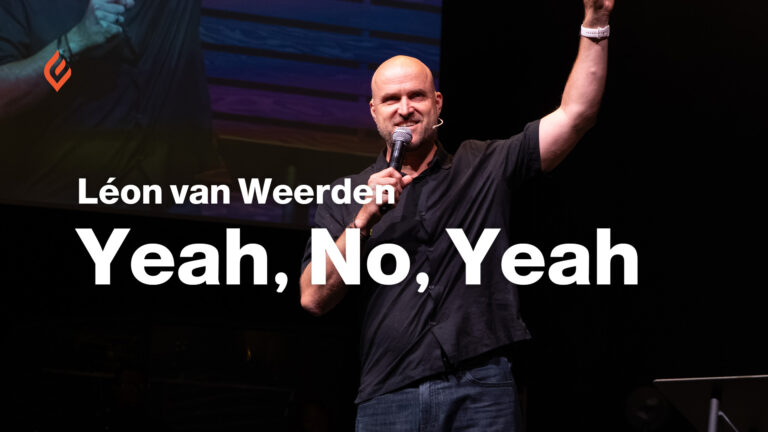
Day 6: What Happens Is What Is Real

General • Refresh: A Summer Collection (Vol. 3) •

“Which of the two obeyed his father?” They replied, “The first.” — Matthew 21:31 (NLT)

Devotion

The Pharisees answered this question immediately. They’d been slow before — calculating, careful, politically measured, but this one they got right without hesitation. Of course the first son obeyed. The second said yes and did nothing. The first said no and went. The action is what counts. What happens is what is real.

In life there’s often a gap between what we said we would do and what we actually did. Between the altar call and the Tuesday. Between the conviction felt in a service and the unchanged pattern at home. Between the prayer prayed and the relationship that stays broken. The yes said in the room and the no lived in the week. None of this makes us failures. It makes us human.

This is the very thing Jesus is addressing, because faith disconnected from action is not yet finished becoming faith. The word for what the first son did is not just intellectual, it is metamelomai and then movement. Feeling differently and then walking differently.

This is not about adding more to your spiritual to-do list. It’s about asking honestly: where is the gap in my life right now? Not to produce guilt but to locate the next honest step.

Reflection

Where is the gap between what you’ve said yes to and what you’ve actually done? Name it specifically, not generally.

Is there someone in your life who could help keep you accountable to what you’ve committed to? How can you practice self-accountability?

Prayer

Lord, I want what I say and what I do to match. The gap between them has been wider than I’ve been honest about. Help me show up in the field this week. Not for the room but for You. Amen.

Day 7: The Temple of Your Heart

General • Refresh: A Summer Collection (Vol. 3) •

“So the Word became human and made his home among us.” — John 1:14 (NLT)

Devotion

Ten years. One sentence. Jesus at the centre of it all.

That has been the heartbeat of this church from the beginning — not a programme, not a set of beliefs arranged correctly, not a culture built around the right kind of worship or the right kind of preaching. A Person. The Living Word who was with God and was God, who became flesh and made His home among us, who came to the temple and was missed by the ones who ran it and recognised by the ones who had nothing left to lose.

He is still coming. He comes to the temple of your heart today in the same way He came to that outer court in Jerusalem. And He is asking the same question He has always been asking: will you recognize Me? Can you have mercy for the Pharisee, the tax collector, the child, the prostitute, the blind and the lame?

Your first answer was never filed as final. What happens is what is real. And what is real is what He is after.

Reflection

Looking back over this week, where has your answer to God been most real and where has it been most performed?

Which person in the temple story could you relate to the most — the child in worship, the blind and lame coming to be healed, the religious leader missing the moment, or the tax collector being welcomed in their state?

Prayer

Lord, You come to the temple of my heart today. I want to be the one who comes running and encounters You. Be the centre of my life, in the reality of how I live. What happens is what is real. So let what happens in me this week be real. Amen.